
Choosing the best time to visit Semuc Champey
The best time to visit Semuc Champey is a planning choice rather than a promise of clear skies. Regional rainfall figures suggest relatively less rain in late winter and spring, with wetter conditions from early summer into autumn. Use that pattern to choose travel dates, then assess the pool, cave activity and road conditions locally on the day. Keep your travel calendar and daily activity decisions separate.
Use the climate comparison to decide how much flexibility you want around the visit. A walk to the Mirador, time at the pools and a water-cave excursion respond to conditions in different ways. If the pools and walking are your main reason for travelling, give them their own time in the itinerary rather than squeezing them between a long arrival and an early onward departure.
Semuc Champey weather and a regional monthly table
The table presents rainfall ranges for the Cobán / Franja Transversal del Norte area from INSIVUMEH monthly bulletins. The climate reference period is 1991 to 2020. These are regional ranges, not readings from a weather station at Semuc Champey. The issue date shown for each row identifies the bulletin used; its climate column describes long-term patterns rather than a forecast for your visit.
| Month | Regional rainfall, mm | INSIVUMEH bulletin |
|---|---|---|
| January | 85 to 190 | January 2026 |
| February | 65 to 115 | February 2025 |
| March | 75 to 135 | March 2025 |
| April | 90 to 120 | April 2025 |
| May | 140 to 195 | May 2025 |
| June | 245 to 305 | June 2025 |
| July | 195 to 280 | July 2025 |
| August | 210 to 320 | August 2025 |
| September | 250 to 360 | September 2025 |
| October | 230 to 345 | October 2025 |
| November | 175 to 290 | November 2025 |
| December | 90 to 180 | December 2025 |
Read the rows as a comparison of regional conditions. The rainfall range describes the area covered by the bulletin, not a prediction of exactly how much rain will fall beside the pools. A lower monthly range still includes rainfall, so use it to shape your trip rather than to promise yourself a dry walking day. For the physical route and smooth limestone surfaces, see the Mirador walking guide.
Our take: a guided day visit
This day trip includes private transport and a guide; check conditions before choosing your travel date.
Hand-picked tours, booked through GetYourGuide. Prices are indicative starting prices in US dollars (as of November 2026). Tap a tour for live availability and the current price in your currency.
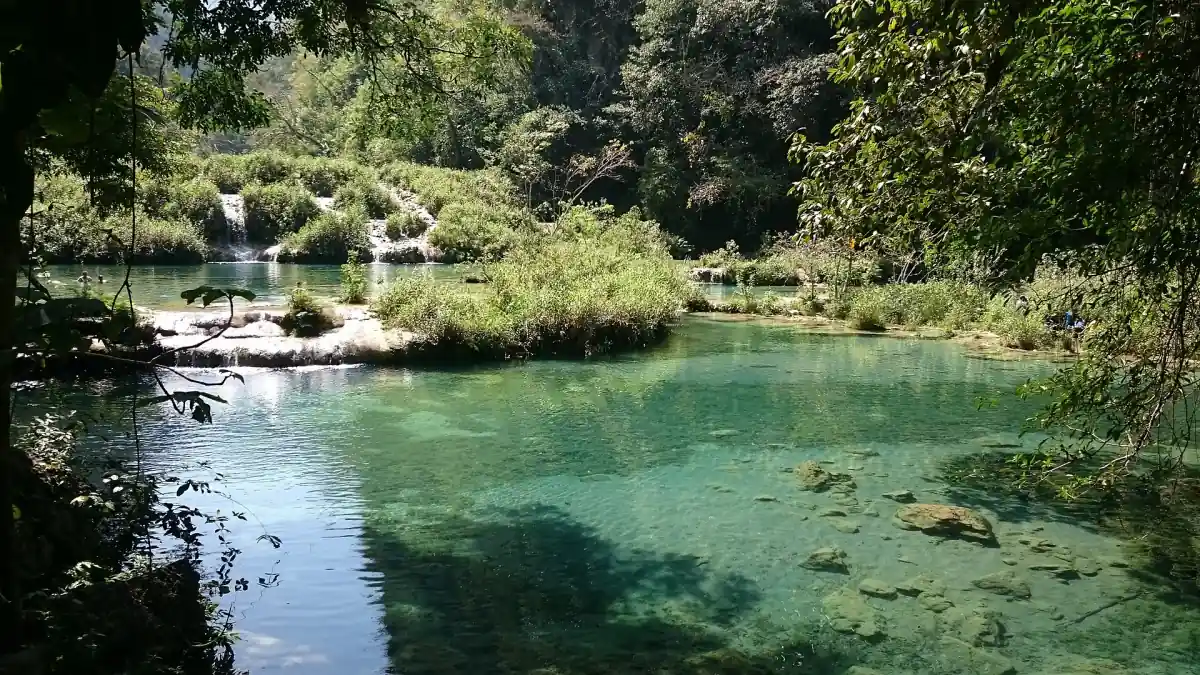
A guided visit with private transport
The day trip from Guatemala City includes a guide and a four-wheel-drive connection. Admission and meals are extra.
Months with relatively less rain
Late winter and spring stand out as a comparatively lower-rainfall window in this regional table. That is an interpretation of the listed climate ranges, rather than an official declaration of ideal visiting months. It is useful if you can choose your travel period freely and want to favour the lower-rainfall part of the pattern. Keep the same attention to conditions when you arrive.
Cold fronts can also bring rain to northern Guatemala and the Franja Transversal del Norte, as described in INSIVUMEH’s October 2025 bulletin. Allow for rain when planning a visit between November and April too. Think instead about a regional tendency and a flexible local schedule. The accommodation guide helps you choose a base that works with that schedule.
Rainy-season access and the final road
For the road from Lanquín, the relevant change is the asphalt and drainage project inaugurated on 10 April 2025. The approach should not be described simply as an unpaved road throughout. CONAP recommends four-wheel drive in the rainy season. Combine that advice with local route information and leave flexibility for the last connection instead of relying on a normal driving estimate.
The arrival guide separates the approach through Cobán, the stop in Lanquín and the road to the monument. Heavy rain makes those practical distinctions especially useful: your long-distance shuttle destination and your accommodation address may be different. Arrange the local connection to the address you have actually booked and consider the return journey when choosing your base.
Safety and flexible visiting days
CONAP recommends soles with good grip because limestone sections can be slippery. Take that advice seriously even in a comparatively lower-rainfall month. Follow local instructions at the pools and distinguish the pool visit from Kanba and river tubing. The cave and tubing guide explains those separate activities so you can choose them on their own terms.
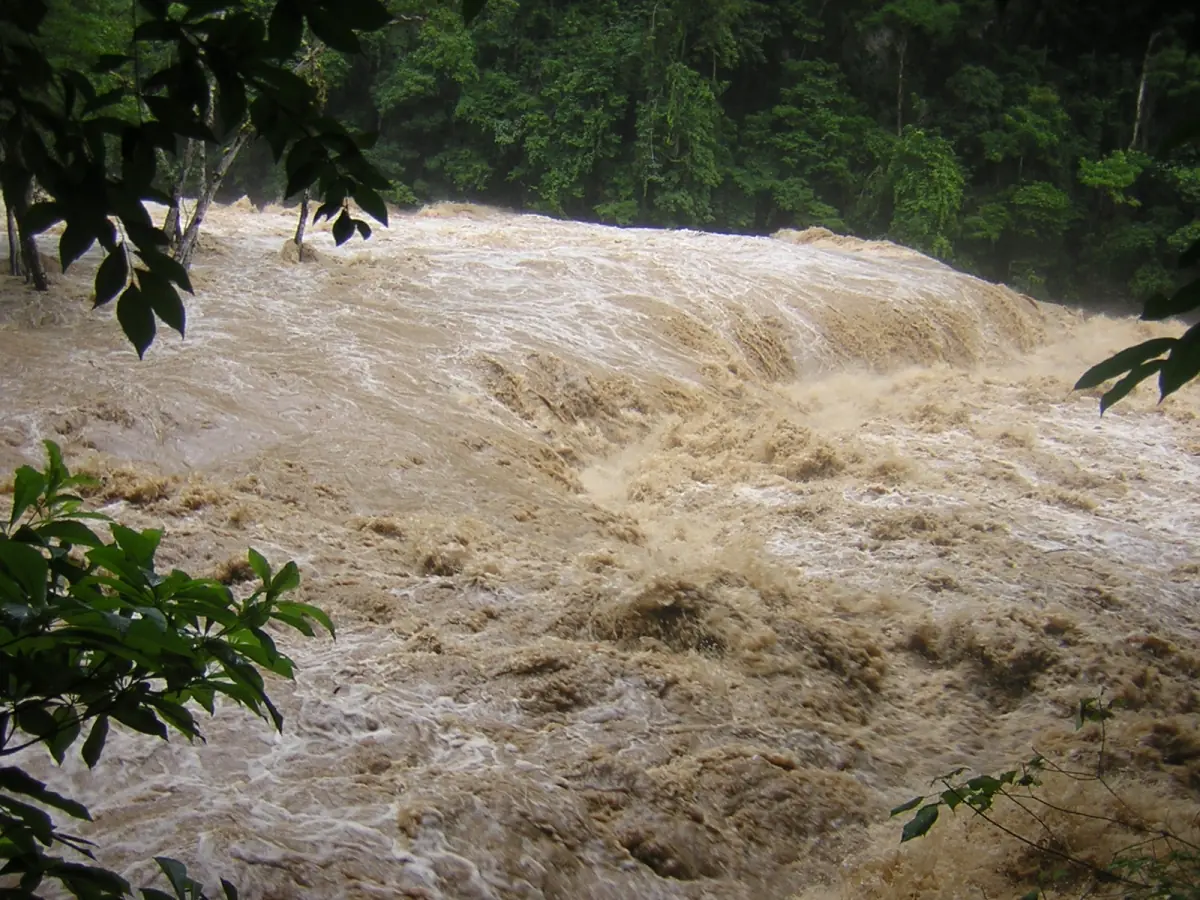
CONRED’s general advice of 28 September 2026 is to keep away from swollen riverbanks and avoid crossing rivers in high water. Its guidance of 22 October 2026 also warns against crossing flooded fords or visibly damaged bridges. These precautions support decisions on the ground; a historical regional warning does not establish today’s park status. Treat photographs, including the floodwater image here, as illustrations rather than live conditions.
The featured visit option from Guatemala City lasts 11 hours and includes private transport, an English- or Spanish-speaking guide and a four-wheel-drive vehicle for reaching Semuc Champey. Admission and meals are extra. Choose it for those transport and guiding arrangements while keeping weather decisions separate from what the package includes. The private transport comparison explains the other formats.
Frequently asked questions
Which months have relatively less rain?
The regional Cobán table points towards late winter and spring. This is a climate-based interpretation, not a guarantee of dry paths or suitable river conditions.
Are these rainfall measurements taken at the pools?
They describe Cobán / Franja Transversal del Norte using the 1991 to 2020 reference period. They are regional ranges rather than a Semuc Champey station series.
Does booking a tour ensure the activities can run in rain?
Use the package to choose transport and guiding, then follow local instructions for conditions on the day. Keep cave, river and pool decisions separate, and allow room to change the sequence of your visit.